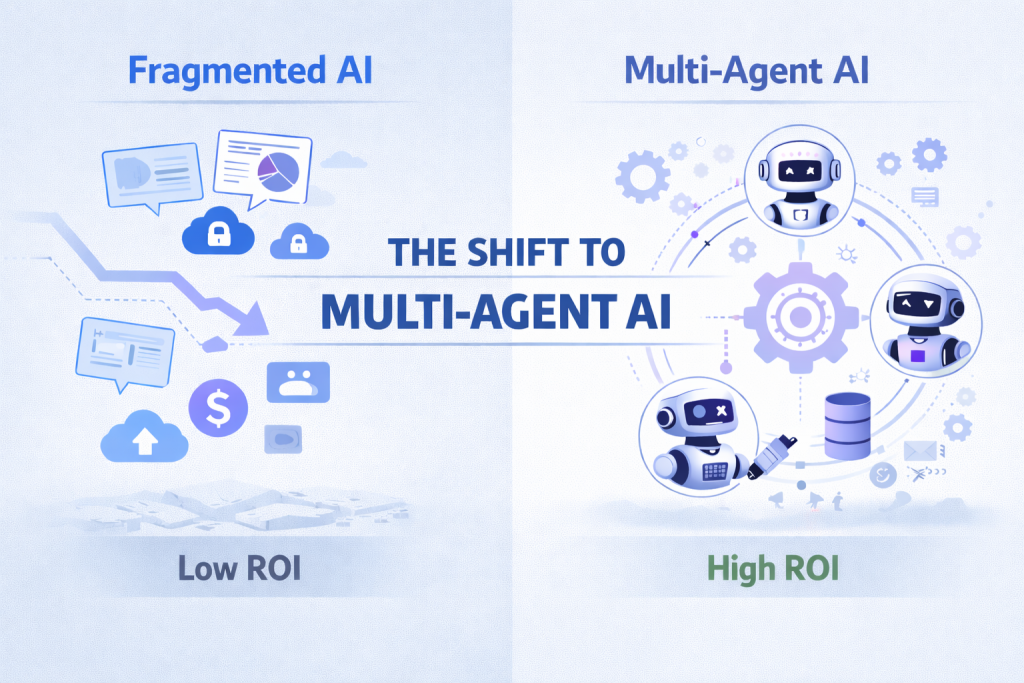


“Companies are giving their partners the leverage ofa Magic Circle-sized team at a fraction of the cost.”
Do you know what is the hidden drain on your firm’s top billers?
Why don’t you pull up any partner’s time sheet from last month. Look past the client meetings, the negotiations, and the high-level strategy calls, the work only they can do.
Look at what’s left: research memos, proposal drafts, document reviews, client update reports.
That work is billed at partner rates. It’s performed at partner rates. But much of it requires an associate-level expertise.
This is the billing paradox at the center of professional services economics. Across the firms we’ve worked with, partners and senior associates spend 25 to 35% of their billable hours on tasks that are fundamentally repetitive: research synthesis, proposal assembly, document review, client reporting.
These aren’t judgement calls, they’re patterns. And patterns are exactly what AI is built to handle.
Every managing partner has watched this play out.
A partner blocks out an afternoon to prepare for a critical client meeting. The goal is to review strategy, analyze the client’s position, and craft advice that only decades of experience can provide.
Instead, the afternoon disappears.
- Hour 1: Searching for an opinion written two years ago.
- Hour 2: Double-checking recent case law.
- Hour 3: Reviewing research notes, comparing contracts, and pulling clauses from old matters.
All of these activities are done before the actual thinking begins. By the end of the day, the work is done. The client gets good advice. But one question rarely gets asked:
Did any of that need to be done by a partner?
That’s the billing paradox law firms are living with today.
The Problem Was Never Awareness. It’s Trust.
Every managing partner already knows this math doesn’t work. You don’t need a consultant to point out that $1,200-an-hour talent shouldn’t spend a third of its time on first-draft synthesis. The constraint has never been ambition. It’s been the absence of a credible alternative.
Earlier automation attempts made the problem worse, not better. Generic AI outputs needed more editing than writing from scratch, which meant senior people spent time fixing instead of delegating, a net loss. And the tools that existed simply weren’t built for the realities of this sector: regulatory specificity, jurisdictional nuance, and the kind of client-relationship sensitivity that makes professional services different from every other knowledge industry.
So firms did what firms have always done when the workload grows: they hired.
More associates to manage the research. More associates to manage the drafting. The load grew. The headcount grew. The margin compressed. And the partner whose time was supposed to be the firm’s most valuable asset kept doing the same repetitive work, just with more people underneath them to coordinate.
The Real Cost Is Lost Leverage
The billing paradox doesn’t just compress margin. It compresses leverage.
A senior lawyer who has to wait three days for a junior associate to return a research synthesis is operating at the speed of their slowest input. A senior lawyer who can produce that same first-draft synthesis themselves, in minutes, is operating at an entirely different clock speed, and with the resource depth that used to belong exclusively to the largest firms with the deepest bench strength.
That’s the strategic insight that’s separating firms right now. The ones building durable competitive advantage are not trying to replace their partners with AI. They’re giving their partners the leverage of a Magic Circle-sized team at a fraction of the cost.
A mid-tier firm with the right systems in place can now move at large-firm speed without carrying a large-firm headcount. That is not a marginal efficiency gain. That is a structural shift in who can compete for what work.
What Safely Accelerated Actually Means
The right question isn’t can AI write a memo. It’s “which parts of our workflow are pattern-based enough to accelerate safely, and which parts require the kind of judgment, discretion, and relationship trust that only a partner can provide.”
That distinction matters enormously in this sector, more than almost any other. Get it wrong and you’ve handed client-sensitive judgment to a system that shouldn’t be making it. Get it right and you’ve freed your most expensive people to spend their time exclusively on the work that justifies their rate, strategy, negotiation, relationship management, the calls that actually require a partner in the room.
This is the core of the leverage model:
- identify the tasks in your workflow that follow recognizable patterns,
- build the systems that handle those tasks reliably and securely, and
- let your partners and senior professionals focus entirely on what can’t be automated.
Not less work for AI to do. The right work, drawn precisely along the line between pattern and judgment.
The Numbers that make this credible
This isn’t theoretical. Across knowledge-intensive professional services deployments, the pattern is consistent and measurable:
- Knowledge synthesis time reduced by 76% in comparable knowledge-intensive B2B environments
- Proposal assembly time reduced by 60–70% across professional services deployments
- First drafts that require editing, not rewriting, the difference between assistance and busywork
- Multilingual capability across 40+ languages, with no additional headcount required
None of these numbers represent partners doing less. They represent partners doing less of the work a junior could do, and more of the work only a partner can do.
The Firms Moving First Are Setting the New Baseline
Here’s the uncomfortable truth for managing partners who are waiting to see how this plays out: the billing paradox doesn’t resolve itself with time. It resolves when someone builds the systems to fix it, and once a competitor has that leverage, the cost structure gap becomes a market position gap.
The firms moving now aren’t doing it because AI is trendy. They’re doing it because the math has never worked, the tools finally exist to fix it, and the first movers in any professional services market tend to set the pricing and capability expectations everyone else has to match.
The question isn’t whether your partners’ time is too valuable for repetitive work. You already know it is. The question is how much longer you’re willing to pay partner rates for associate output while your competitors stop.
The Eligere Leverage Model |
Judgment Before Process |
|
We begin by identifying the work that follows patterns rather than requires expertise. Research synthesis, document review, proposal preparation, reporting; tasks that consume valuable professional time but don’t demand partner-level judgment. Using the Eligere Leverage Model, we build AI agents that handle those activities, allowing partners and senior professionals to focus on strategy, relationships, and counsel—the work only they can do. The result is greater leverage without greater headcount: the capacity of a much larger team, without the cost structure of one. |
|
Model
Run the leverage diagnostic on your own firm |
|
The Eligere Leverage Workshop maps where time is spent across your workflows and identifies which activities can be safely accelerated by AI. In a structured half-day session with your leadership team, we quantify how much partner and senior professional time is being consumed by repetitive work. Most firms find the number considerably larger than they expect. We show you exactly where the leverage opportunities are and exactly what it would take to capture them. Let’s find the 25% of time you can give back. One AI Opportunity Workshop. One day. A ranked list of every hour you can recover. |